
Sound Medicine vs. The Volume Trap: The Entrepreneur’s Guide to Audio Healing & Hearing Safety
We spend hours every single day plugged into our digital devices, using our earbuds to build a private wall against the noise of the modern world. But what if the audio flowing through your earbuds could do more than just pass the time? What if it could actively heal your brain, melt away stress, or sharpen your focus to a razor’s edge?
Emerging research into psychoacoustics—the study of how human beings perceive sound—suggests that our headphones are no longer just passive entertainment accessories. Instead, they are becoming powerful clinical instruments for cognitive enhancement.
However, there is a catch. As we embrace the therapeutic potential of sound therapy headphones, we are walking a dangerous tightrope. There is a razor-thin line between an audio track that stimulates your nervous system and a volume level that inflicts permanent, irreversible damage. To unlock the true benefits of audio wellness without compromising your headphones and hearing health, you have to understand the intersection of advanced audio neurology and strict acoustic safety.
Here is how you can turn your daily headphone habit into a safe, cutting-edge wellness engine.
The Science of Audio Healing: What Happens to Your Brain?
To understand how sound can heal, we have to stop thinking of our ears as simple microphones and start viewing them as direct data ports to the brain. When sound waves hit your eardrum, they are instantly converted into electrical impulses that travel up the auditory nerve, triggering a cascade of neural and chemical changes throughout your grey matter. This works for business very well, so you can perform good under pressure.
Brainwave Entrainment Audio and Binaural Beats
One of the most fascinating ways to utilize this connection is through a neurological phenomenon known as brainwave entrainment. Your brain contains billions of neurons that communicate via rhythmic electrical pulses called brainwaves. When you introduce a rhythmic external stimulus, your brain naturally synchronizes its internal electrical pulses to match that frequency.
Here is a FREE sound tool you can use to help with business and life
This sound helps manifest what you check it out
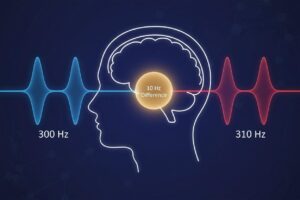
This is where the unique mechanics of binaural beats health benefits come into play. A binaural beat is a clever auditory illusion. If you play a steady 300 Hz tone in your left ear and a 310 Hz tone in your right ear, your brain cannot process them as separate entities. Instead, it manufactures a third, phantom frequency to bridge the gap—a 10 Hz frequency that doesn’t actually exist in the physical room.
By using targeted brainwave entrainment audio, you can intentionally guide your brain into specific, optimized states:
- Delta Waves (1 to 4 Hz): Triggered for deep, restorative sleep and physical cellular repair.
- Theta Waves (4 to 8 Hz): Associated with deep meditation, REM dreaming, and profound anxiety relief.
- Alpha Waves (8 to 12 Hz): The holy grail for productivity—a state of relaxed, effortless flow and deep focus.
Activating the Rest-and-Digest Response
Beyond changing your mental focus, therapeutic audio can physically alter your autonomic nervous system. When you listen to organic, low-frequency soundscapes or slow, rhythmic acoustic pulses, it triggers a parasympathetic nervous system activation sound response.
The auditory pathway is deeply intertwined with the vagus nerve, the primary superhighway responsible for lowering your heart rate and calming inflammation. Gentle, structured frequencies signal to your brain that you are safe, downregulating the production of cortisol and adrenaline. This pulls your body out of the exhausted, hyper-vigilant “fight-or-flight” loop that dominates modern life, substituting it with a deep sense of biological calm—all through a simple pair of headphones.
The Silent Risk: Navigating the Modern Volume Trap
The World Health Organization warns that over one billion young adults are actively at risk of permanent hearing loss due to unsafe listening habits. The problem isn’t the headphones themselves; it is how we use them to mask the chaotic noise of our daily environments. Because hearing damage happens incrementally without causing immediate pain, most people don’t realize they are injuring themselves until tinnitus (persistent ringing in the ears) or muted hearing sets in. True noise-induced hearing loss prevention requires understanding the subtle math behind how our ears handle acoustic energy.
The Decibel Cliff: 85 dB vs. 100 dB
The human ear does not perceive sound volume linearly; it processes it logarithmically. This means a tiny tick upward on your phone’s volume slider results in a massive, exponential spike in real pressure hitting your eardrum.
To map out your safety margins, keep this decibel cliff in mind:
- 85 Decibels (dB): Equivalent to the ambient roar of heavy city traffic. Your ears can safely tolerate this level of exposure for up to 8 hours a day without structural damage.
- 100 Decibels (dB): Equivalent to a live rock concert or a lawnmower. This is typically where your smartphone hovers when pushed to maximum volume. At 100 dB, your safe listening window collapses from 8 hours to a mere 15 minutes.
If you are listening to a 45-minute binaural beats track at maximum volume to relax your mind, you are actually causing acoustic trauma to your ears during the final 30 minutes of the session.
The Danger of Commuter Compensation
The most common way people fall into the volume trap is through “commuter compensation.” Imagine sitting on a loud subway train or working out in a gym where the background ambient noise hits 80 dB. To clearly hear a subtle meditation track, an audiobook, or low-frequency soundscapes over that background din, your natural instinct is to crank your device past the noise floor.
Unconsciously, you push your headphones up to 102 or 105 dB to blast over your surroundings. In that environment, microscopic cellular damage occurs in under 4 minutes. You might feel mentally focused or relaxed by the audio content, but biologically, your inner ear is under severe mechanical stress.
To combat this, a growing number of professionals are adopting volume-limiting headphones for adults. Long thought to be a feature exclusive to children’s tech, adult volume-limiters place a hard, internal ceiling on the hardware at 85 dB. This guarantees that even if you accidentally bump your phone’s volume buttons in your pocket, or try to override a noisy environment, your gear steps in to keep you firmly in the safety zone. Protecting your headphones and hearing health means setting hard boundaries before environmental noise forces your hand.
Hardware Hacks: Safe Sonic Therapy Gear
When it comes to biological optimization, not all audio gear is created equal. Standard, cheap plastic earbuds often prioritize piercing treble or bloated, muddy bass, distorting the delicate frequencies used in cognitive audio therapies. Worse yet, they offer zero isolation from external noise. To protect your ears while diving into audio wellness, look to two specific technological innovations.
Active Noise Cancellation (ANC) as Hearing Protection
Most people view Active Noise Cancellation (ANC) as a luxury feature meant strictly for frequent flyers and open-office workers. In reality, modern ANC is one of the greatest tools we have for clinical hearing preservation.
ANC technology works by using external microphones to listen to the ambient noise around you (like the hum of an air conditioner or the roar of traffic). It then instantly generates an inverted sound wave—an “anti-sound”—that plays into your ear, completely neutralizing the outside noise before your eardrum can process it.
By investing in high-quality headphones that provide active noise cancellation hearing protection, you effectively wipe away the background noise floor. This allows you to listen to subtle brainwave entrainment tracks, ambient nature soundscapes, or calming alpha frequencies at remarkably low, safe volumes. You no longer have to turn up the volume to fight the world around you; the headphones create a silent sanctuary so the therapeutic audio can do its job naturally.
The Rise of Open-Ear and Bone Conduction Tech
For some people, trapping sound waves inside a sealed ear canal causes discomfort or triggers an annoying “plugged-up” physical sensation (known scientifically as the occlusion effect). This is where bone conduction technology comes into play.
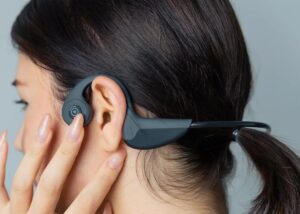
Instead of using traditional speakers that blast sound waves through your eardrums, bone conduction headphones sit entirely outside the ear canal, resting directly on your cheekbones. They translate audio data into tiny, physical vibrations that travel through your skull bones directly to your inner ear cochlea.
This tech has become incredibly popular as a form of bone conduction headphones for tinnitus relief. Millions of people suffering from chronic ringing in the ears use ambient white noise, pink noise, or ocean wave therapies to habituate their brains away from the internal ringing. Using bone conduction allows them to gently overlay these soothing therapeutic sounds into their auditory system while leaving their ear canals wide open to hear the real world around them. It turns sound therapy into a seamless, spatial, and ambient experience that safely blends with daily life.
The Golden Rules for Headphone Wellness
Integrating sound therapy into your life shouldn’t feel like a chore. By adopting a few simple habits, you can maximize your cognitive gains while maintaining an airtight defense for your ears.
- The 60/60 Rule: This is the universal standard for safe listening. Cap your device audio at a maximum of 60% volume, and limit your continuous listening to no more than 60 minutes at a single stretch. Afterward, remove your headphones for at least 10 minutes to allow the delicate hair cells in your inner ear to rest and recover.
- Take Neural Audits: Periodically pay attention to how your ears feel after a long session. If you experience “listening fatigue”—where processing ordinary face-to-face conversations feels unusually draining, or sounds seem slightly muffled—your brain is telling you it has had enough.
- Get a Baseline Hearing Test: If you are actively using therapeutic frequencies for multiple hours a week to manage stress or focus, treat your ears like any other biological asset. Getting an annual audiogram gives you a definitive baseline to ensure your wellness routine isn’t accidentally causing quiet damage behind the scenes.
FAQ: Frequently Asked Questions
Are noise-canceling headphones better for your hearing health?
Yes. By actively neutralizing background chaos, they eliminate the instinctual urge to unsafely crank the volume to drown out your environment. They allow you to hear subtle audio details clearly at much lower, safer decibel levels.
Can sound frequencies through headphones actually reduce stress and anxiety?
Absolutely. Clinical data shows that targeting your brain with alpha and theta auditory rhythms successfully stimulates the parasympathetic nervous system. This biological shift effectively lowers your heart rate, decreases acute anxiety responses, and downregulates cortisol production.
How long is it safe to wear headphones a day?
It depends entirely on your volume settings. If you keep the audio at or below 80 dB, you can technically wear them safely for the duration of a standard workday. However, to prevent ear canal moisture buildup and physical fatigue, taking brief, hourly breaks is highly recommended.
Conclusion
Sound is no longer just something we consume for passive distraction. It is a legitimate, accessible tool for modern stress management, cognitive enhancement, and neurological healing. Whether you are using binaural beats to slip into a deep state of creative flow or relying on bone conduction to find relief from chronic tinnitus, the acoustic space you build inside your head matters.
But remember: your brain can only benefit from sound therapy if your biological receptors remain intact. By pairing the right hardware with disciplined listening habits, you don’t have to choose between a sharp mind and sharp hearing. Turn your volume toggle down by just two notches today, find a high-quality therapeutic track, and let your headphones do what they were truly meant to do: heal.